
Partnership to scale textile-to-textile recycled polyester with Target
A broader collaboration is set to increase the availability of textile-to-textile recycled polyester in high-volume retail categories. Syre AB, Stockholm/Sweden, has expanded its partnership with Target Corp., Minneapolis, MN/USA, to accelerate the integration of next-generation recycled materials into apparel and home products at scale.
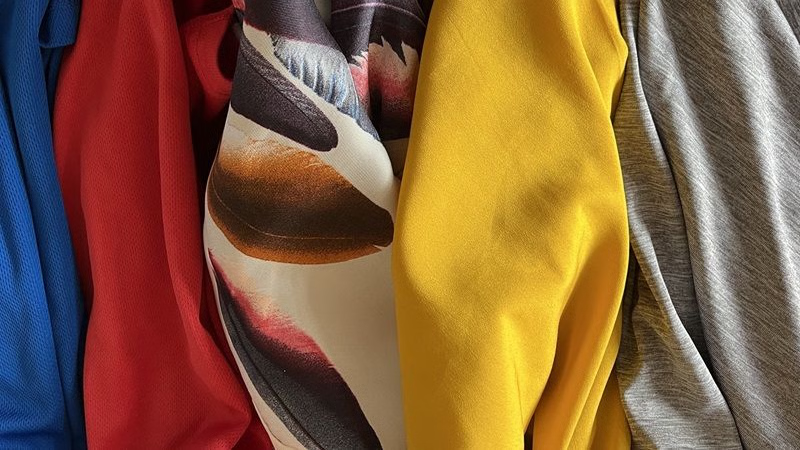
Under the agreement, Syre will support the US retailer in incorporating polyester made from end-of-life textiles into selected product lines. The initiative is expected to enable the use of 70,000 tons of recycled polyester and to establish circular materials in core categories by 2030. According to the companies, the material is designed to deliver quality comparable to virgin polyester while reducing environmental impact.
The collaboration aligns with plans to construct the first large-scale recycling facility in Southeast Asia, with construction scheduled to begin in 2027. The new plant is intended to provide industrial-scale capacity for textile-to-textile recycling and to strengthen supply security for brand partners. In addition to Target, Syre works with companies such as H&M Group and Nike to expand access to circular textile solutions and to support the transition toward a more circular textile industry.
About Syre
Syre has a mission to decarbonize and dewaste the textile industry through textile-to-textile recycling at scale, starting with polyester. The company’s textile-to-textile recycling solution provides circular polyester with quality on par with virgin polyester, but with a superior sustainability performance. Founded in 2023, Syre is initiated by H&M Group and Vargas, and backed by founding investors TPG Rise Climate, Giant Ventures, IMAS Foundation, Leitmotif, Norrsken VC, and Volvo Cars.
This text first appeared on man-made-fibers.textiletechnology.net.
Do you have questions or comments about this article?
Send an email to the editorial team.
Contact content.syndication@dfv.de if you would like to acquire the usage rights to this article.